 Donate

COLIBRÍ RESEARCH COLLECTIVE

Telling the story of our community through research
ALAS Colibrí is a participatory center dedicated to engaging community voices to confront health disparities, structural trauma, and strengths rooted in cultural identity within marginalized communities, particularly those impacted by immigration. We incorporate both statistical and qualitative data from a range of sources to understand the effects of systemic injustices on individuals' lives, and forms of resistance and resilience. We use a participatory, action-oriented, and strengths-based approach. Our team includes community members, researchers from esteemed institutions such as Stanford, the University of San Francisco, and UC Irvine, as well as ALAS staff.
Areas of Interest
Immigrant/Latine youth mental health and development
Farmworker health equity
Immigration-related stress, trauma, and strengths
Community-centered behavioral health care
Community and youth empowerment
Research as advocacy
Community-engaged research strategies
Cultura Cura: Cultural arts as healing interventions
Immigrant/Latine youth mental health and development
Policy impacts on health and social disparities in immigrant communities
Community Engagement Programs
Community Advisory Board (CAB)
Colibrí is community-based
and community-led.
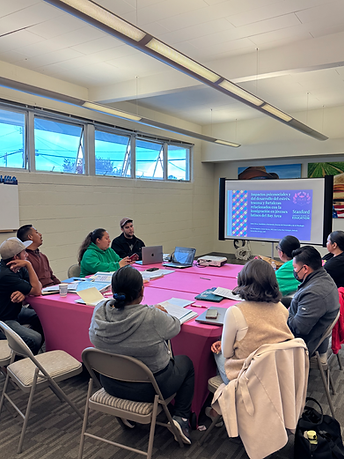
Colibrí is centered around our Community Advisory Board (CAB), a group of community members who provide leadership by creating priorities, selecting collaborations and methods, and strengthening relationships between researchers and the community. CAB Members participate in educational workshops on research methods and principles. Researchers also present their projects to the CAB to gain feedback on how to make their research approaches participatory and community-based.
YPAR Ambassadors
Youth Participatory Action Research
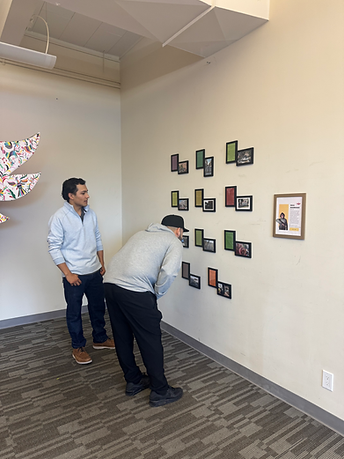
The YPAR Ambassador program engages local high school and undergraduate students to build research skills, foster advocacy, and be leaders for community-driven change. Students complete individual or small-group projects on health equity issues in their community, culminating in a Photovoice Gallery Exhibition. Through their photography, students address issues they’re passionate about, reflect on their own experiences that shape their perspectives on these issues, and shared the changes they hope to see in their community.
View a virtual version of the 2025 Photovoice Gallery here.
Proyecto Salvavidas:
Healthcare Career and Mentorship Program for Youth
Proyecto Salvavidas is an initiative designed to address the critical need for increased representation of Latinx students in healthcare education and leadership pathways. Salvavidas includes educational workshops and field trips, career panels and networking, professional mentoring and college counseling, and internship opportunities. Salvavidas is open to local high school students interested in healthcare, medicine, and life sciences.
Salvavidas is a collaboration between ALAS and Stanford Health Care, generously funded by the Gilead Foundation.
If you are a local student or public high school interested in participating in Salvavidas, contact Antonio Lopez, Associate Director of Research and Advocacy antonio@alasdreams.com

Research Initiatives
Featured Studies

Bienestar Comunitario: The Latiné Community Assessment 2023
ALAS was honored to coordinate this groundbreaking community-led assessment by and for our Latino community in San Mateo County. The goal of the assessment was to identify the social and environmental factors that contribute to or prevent mental health challenges and substance use amongst Latiné youth and families, and to make recommendations to the county on how to better support our Latino community. We were proud to partner with ten community organizations across San Mateo County and with Behavioral Health and Recovery Services (BHRS) to conduct this assessment in 2022-23 and co-lead implementation strategies in 2024-2025.
Tags: Immigrant/Latine youth mental health and development, Community and youth Empowerment, Cultura Cura: Cultural arts as healing interventions, Community-engaged research strategies; Research as advocacy, Immigration-related stress, trauma, and strengths, Substance use and abuse, COVID-19 pandemic, county-wide research

MIST-C: Measuring and healing immigration-related trauma in children
Development and validation of the Measure of Immigration-Related Stress, Trauma, and Strengths in Children (MIST-C)
In this mixed-methods study, we are developing and validating the Measure of Immigration-Related Stress, Trauma, and Strengths in Children (MIST-C), an interview-based clinical questionnaire. It is designed to identify stressors, trauma, and healing processes affecting the psychosocial wellbeing and mental health of immigrant, asylum-seeking, and refugee children. The tool adopts a strengths-based and trauma-informed approach. It will undergo pretesting and piloting at clinical and community sites in multiple geographic locations nationally for psychometric validation. The tool will support clinical, advocacy, and community-centered research goals.
Tags: Immigrant/Latine youth mental health and development; Immigration-related stress, trauma, and strengths; Community-centered behavioral health care; Research as advocacy

Coastside PRIMES: Community-embedded approaches to child behavioral health care
Coastside PRIMES (Promoting Resilience at the Intersection of community, legal, Medical, and Educational Supports) Clinic
The PRIMES clinic integrates educational advocacy, case management, community-supported telehealth, in-person DBP care, and access to legal aid. This clinical initiative aims to address the inadequate and inequitable access to developmental-behavioral pediatric (DBP) care for racially marginalized and largely immigrant communities. In our feasibility study, we are using mixed methods approaches to explore experiences and outcomes, including wait times, patient/family satisfaction, and staff/community views on feasibility, to inform a novel trauma-informed care program that is sensitive to the distinctive needs of this community. The program is a collaboration between ALAS, San Mateo County Legal Aid’s Family Advocacy Program (FAP), and Stanford Children’s Health Developmental-Behavioral Pediatrics (DBP).

Cultural arts program impact studies
Investigating the role of cultural arts in social and emotional wellbeing for youth
These qualitative studies investigate the effects of cultural arts programs on the well-being and mental health of immigrant youth. We have conducted interviews and focus groups to explore natural leadership resources and cultural richness of both parents and youth, as well as how cultural arts programs contribute to their well-being and mental health. We're particularly interested in understanding how these programs influence identity, family dynamics, and community well-being. This work aims to guide interventions and stimulate further exploration into the role of strength-based, culturally-grounded programs in mental health and educational settings that honor traditional indigenous healing practices. This body of work underscores the healing and community-building potential of cultural arts, while also highlighting the pressing need to address the psychological impacts of children and parents' documentation status on well-being in the United States. The findings will inform program development and policy priorities to support this community and bridge social and health disparities.
Other Projects
Understanding immigrant/latine youth emotional development through culture and identity
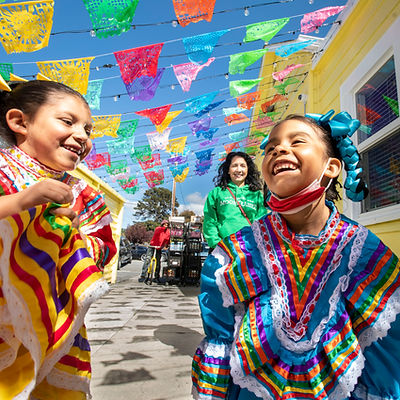
Many of our projects investigate how culture, identity, and immigration-related experiences impact youth mental health. We aim to not just document the negative consequences of racism and anti-immigrant policies, but to uplift the unique strengths attributed to immigrant experiences. Our strengths-based approach seeks to broaden developmental theories of attachment and emotional needs by exploring themes of community support, culture, and identity.
Tags: Immigrant/Latine youth mental health and development, Community and youth Empowerment, Cultura Cura: Cultural arts as healing interventions

Farmworker perspectives on social needs, health disparities, and structural violence
Farm workers are integral to the agricultural industry but are systematically excluded from health and social resources. Such exclusion has created economic, social, and health disparities. We have worked on multiple qualitative studies exploring farmworkers’ experiences and narratives related to social disparities and their priorities for social transformation. Our community-driven studies co-design methodologies with farmworkers and advocates to expose disparities, highlight strengths, and inform social action. Results from our studies have been shared with local and state politicians, and with members of Congress at the U.S. Capitol.
Tags: Farmworker health equity; Immigration-related stress, trauma, and resiliency; Policy impacts on health and social disparities in immigrant communities; Community-engaged research strategies; Research as advocacy

Literature review: Impacts of immigration on sleep
We are reviewing the literature to identify studies that will help us understand how moving to the United States affects children’s sleep. More specifically, we want to know what challenges immigrant children might face when it comes to getting good rest when compared to non-immigrant children. We do this because many immigrant children experience stress, trauma, or changes in their environment, which can lead to sleep problems and impact their overall health and well-being. This work is important because healthy sleep is essential for children’s growth, learning, and mental health, and understanding these issues can help families, teachers, and healthcare providers better support immigrant children.
Tags: Immigrant/Latine youth mental health and development; Immigration-related stress, trauma, and strengths
Academic Publications
Acompañamiento as a Latine critical race theory approach to community public health research | Latino Studies
Malagon, J.C.R. (2025).
Chapter 8: Racism and the Health of Latiné Communities | Racism: Science & Tools for the Public Health Professional, 2nd Edition
Lebrón, A. M. W.; Ruiz Malagon, J. C.; Viruell-Fuentes, Edna A. (2024)
Chapter 10: Un Respiro de Vida, a breath of life: Giving wings to farmworker families during the COVID crisis | School-Based Family Counseling for Crisis and Disaster
Herández-Arriaga, B. & Ruiz Malagon, J. C. (2023)
Olvidados Entre la Cosecha: Understanding Social Needs and Health Disparities through Farm Workers' Perspectives | Stanford Digital Repository
Ruiz Malagon, J. (2023).
There is a Monster in my House, Cultura Cura Uncovering 11 Milliones de Sueños: Understanding the Emotional and Psychological Experiences of Undocumented and Mixed-Status Youth and Finding Healing Spaces | University of San Francisco Scholarship Repository
Hernandez-Arriaga, B. M. (2017).
Providers’ understanding of patient experiences and disparities navigating telehealth services amid the COVID-19 pandemic | Journal of Health Equity, 2(1), 2444003
Silver, J., Ruiz Malagon, J. C., Félix Beltrán, L., & Bustamante, A. V. (2025).
Legal Violence as a Structural Determinant of Health in U.S. Immigration Governance | Community Health Equity Research & Policy, 2752535X261418333
Ruiz Malagon, J. C., Hernandez-Arriaga, B., Reyna Rivarola, A. R., Argenal, A., & Berens, A. E. (2026).
Moving Beyond Performative Research Methods: Advancing Health Equity Through Transformative Community-Based Participatory Research Praxis | Health Equity
Ruiz Malagon, J. C., Hernandez-Arriaga, B., & Reyna Rivarola, A. R. (2026).
“We matter and are experts”: testimonios of structural violence and survival among transgender Latinas in Los Angeles County | International Journal of Transgender Health, 1–16
Ruiz Malagon, J. C., Salcedo, B., Hernandez-Arriaga, B., Teklehaimanot, S., & Davis, C. (2026).
Thermal inequities in public parks and open spaces in Los Angeles determined by remote sensing | npj Urban Sustainability
Agatep, A., Fisher, J. B., Tacazon, K., Rivera, A., Zayas, R., Archer, R., Ruiz Malagon, J.C., Douglas, J. A. (2026).
Bearing injustice: A qualitative case study of structural violence, collective trauma, and farmworker survival after a mass shooting | Latino Studies
Ruiz Malagon, J., Hernandez-Arriaga, B., & Rivarola, A. R. R. (2026).
Crimmigration Pedagogy in an Age of State Violence: Reclaiming Human Rights Education in Public Health and Social Work | International Journal of Human Rights Education, 10(1), 7
Ruiz Malagon, J. C., Hernandez-Arriaga, B. M., & Reyna Rivarola, A. R. (2026)
Olvidados Entre la Cosecha: Understanding Social Needs and Health Disparities through Farm Workers’ Perspectives | Journal of Latino-Latin American Studies (JOLLAS), Advance online publication on Project MUSE
Ruiz Malagon, J.C., Hernández-Arriaga, B., Berens, A., Wang, N.E., Matlow, R., & Jiménez, R. (2026)
Un milagro de Dios (A miracle of God): Experiences of community service providers working with marginalized Latinx communities under systems of oppression, hostility, and violence. Peace Review.
Garcia, D., Martínez, D. A., Hernandez-Arriaga, B., & Angeldones, V. (2025).
“They treat us like we are not human:” Asylum seekers and “La migra’s” violence. Psychology of Violence, 12(4), 241–251.
Domínguez, D. G., Hernandez-Arriaga, B., Noriega, M. A., García, D., & Martínez, D.A. (2022).
Leveraging the power of mutual aid, coalitions, leadership, and advocacy during COVID-19. American Psychologist, 75(7), 909–918.
Domínguez, D. G., García, D., Martínez, D. A., & Hernandez-Arriaga, B. (2020).
Cruzando fronteras: Liberation psychology in a counseling psychology immersion course. Journal of Latinx Psychology, 8(3), 250–264.
Domínguez, D. G., Hernandez-Arriaga, B., & Paul, K. S. (2020).
Dibujando en Tent City: Art by asylum-seeking children in the U.S.–Mexico border. Psychology, 69.
Hernandez-Arriaga, B., & Domínguez, D. (2020).
67 Sueños: Inspiring a movement for undocumented voices to be heard. Association of Mexican American Educators Journal, 6(1).
Hernandez-Arriaga, B. (2012).
“To transform and be transformed:” Testimonios of humanizing praxis and a community engaged CARE. In D. Philoxene, D. Soto-Vigil Koon, & E.H. Fuentes (Eds)., Crafting homeplace in the academic borderlands (pp. 101-121). Teachers College Press.
Hernández-Arriaga, B., Jimenez, R.M., & Bleasdale, J. with P. Ramirez & Z. Barron (2024).
Activist accompaniment as pedagogy. In A. Argenal, S. Sirota, & M. Hantzopoulos (Eds.), Community engaged praxis in peace, social justice, and human rights education: Partnering for transformative change. Teachers College Press.
Un respiro de vida, a breath of life: Giving wings to farmworker families during the COVID crisis. In B. Gerrard, E. Hernandez, & S. Deb (Eds.). School-based family counseling for crisis and disaster: Global perspectives (pp. 115-124). Routledge.
Hernández-Arriaga, B., Ruiz Malagon, J.C. (2023).
Querida América: Narrativas contra el protocolo de protección a migrantes. In C. Tigau, S. Sahoo, & W. Gois (Eds.), Migración, diásporas y desarrollo sostenible: Perspectivas desde las Américas (pp. 27–41). Universidad Nacional Autónoma de México.
Argenal, A., Hernandez-Arriaga, B., García, C., & Chávez, A. (2023).
Dreams of an education from Tent Zero: A case study of asylum-seeking children impacted by Migrant Protection Protocols (MPP) at the US–Mexico border. In A.W. Wiseman & L. Damaschke-Deitrick (Eds.), Education for refugees and forced (im)migrants across time and context (pp. 75–88). Emerald Publishing Limited, Leeds.
Hernandez-Arriaga, B., & Argenal, A. (2023).
Querida América: Testimonios of faith, solidarity, and survival along the US/Mexico border. Handbook of Health and Well-Being (pp. 83–96). Springer, Singapore.
Hernandez-Arriaga, B., Garcia, C., Argenal, A., & Chavez, A. (2022).
“Todos somos humanos, danos una oportunidad”: Amplifying voices of asylum seekers through activism accompaniment. In C. Magno, J. Lew, & S. Rodriguez (Eds.), (Re)mapping migration and education: Centering methods and methodologies (pp. 158–175). Brill.
Hernandez-Arriaga, B., & Argenal, A. (2022).
The undocumented truth: Uncovering stories of La Perrera, trauma, human rights violations and separation of children and families released from ICE in South Texas. In F. Bravo, & E. Brigham (Eds.), Beyond borders: Reflections on the resistance and resilience among immigrant youth and families (p. 92). Lane Center Series, University of San Francisco Press.
Hernandez-Arriaga, B. (2019).